

Owning rental property in Nevada comes with real financial exposure. Between tenant disputes, property damage, and liability claims, landlords face risks that can quickly drain profits.
We at Invest America Insurance help Nevada landlords protect their investments with rental property insurance Nevada that actually covers what matters. This guide walks you through the coverage types, state requirements, cost factors, and practical steps to secure the right protection for your rental.
What Coverage Do You Actually Need for a Rental Property in Nevada
Dwelling Coverage Protects Your Physical Asset
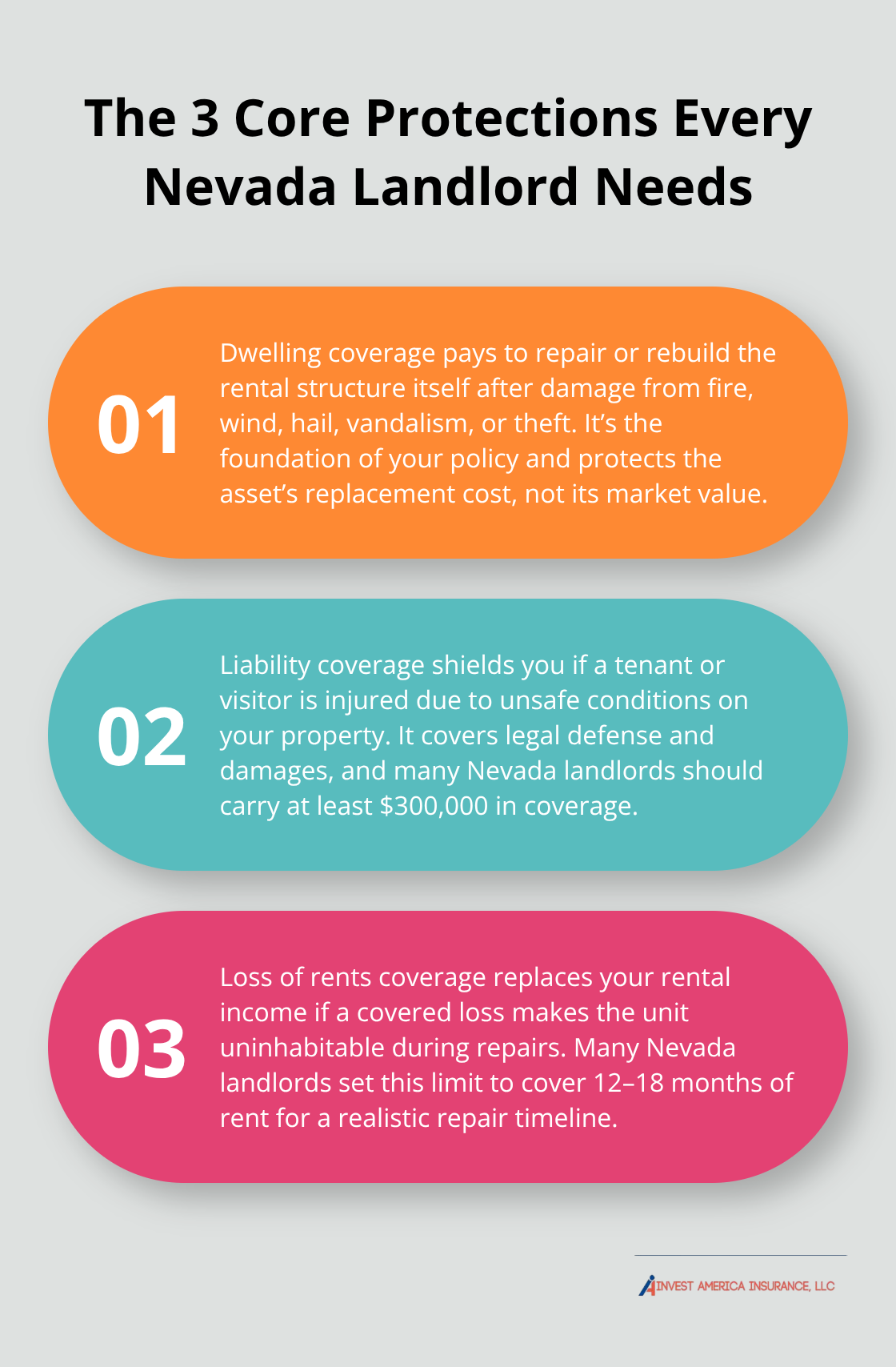
Rental property insurance in Nevada breaks down into three essential protections that work together to cover your investment. Dwelling coverage pays to repair or rebuild the rental structure itself after damage from fire, wind, hail, vandalism, or theft. This is your foundation-without it, a single fire could wipe out your entire asset. The Insurance Information Institute reports that landlord insurance in Nevada costs approximately $1,300 per year on the national median, with rates of $3.32 per $1,000 of total insured value-making comprehensive dwelling protection affordable even on tight margins.
Structure coverage extends beyond the main building to detached garages, sheds, and fences-items that add real value but often get overlooked. Las Vegas properties with detached structures should include these in the dwelling limit rather than treat them as an afterthought. Age matters significantly here: homes built before 1950 often cost more to insure because replacement materials and labor are more expensive, while homes with updated roofing, electrical wiring, and plumbing systems typically qualify for lower rates.
Liability Coverage Shields You from Injury Claims
Liability coverage is where most landlords underestimate their exposure. If a tenant or visitor is injured on your property due to unsafe conditions-a cracked stair, poor lighting, or a broken handrail-they can sue you for medical bills and lost wages. Liability protection covers legal defense costs and damages up to your policy limit, typically ranging from $100,000 to $500,000. Nevada landlords should carry at least $300,000 in liability coverage given the state’s legal environment and potential injury costs. This protection addresses real financial risk that can exceed property value itself.
Loss of Rents Coverage Replaces Income During Repairs
Loss of rents coverage reimburses your monthly rental income if a covered event makes the property uninhabitable. If a fire damages the kitchen and the unit sits vacant for three months while repairs happen, this coverage replaces the rent you would have collected. The coverage applies only to income lost due to covered perils, not tenant non-payment or eviction delays. This distinction matters: you cannot claim lost rent from a tenant who stops paying-that requires separate rent guarantee insurance, which is expensive and comes with high deductibles. Most Nevada landlords carrying loss of rents coverage set it at 12–18 months of monthly rent, providing a realistic buffer for extended repairs.
Understanding these three core protections positions you to make informed decisions about your coverage limits. The next step involves examining how Nevada’s specific regulations and climate conditions shape your insurance needs and available options.
Nevada’s Rental Insurance Landscape
State Law and Lender Requirements Shape Your Coverage Decisions
Nevada law does not mandate landlord insurance by statute, but this does not mean you can skip it. Most mortgage lenders require coverage as a condition of financing, and without it, you face uncovered losses that can exceed your property’s value. The state’s legal environment also matters: Nevada has no caps on liability damages in many cases, meaning a serious injury claim could reach six or seven figures. You should carry at least $300,000 in liability coverage as a baseline for Las Vegas properties, where population density and tourism traffic increase injury risk compared to rural areas. Your lender’s requirements will specify minimum dwelling coverage tied to the property’s replacement cost, not market value, so obtain an updated replacement cost estimate before shopping for quotes. Nevada allows landlord insurance premiums to be tax deductible based on the property’s assessed value, a benefit that reduces your effective insurance cost and should factor into your budget planning.
How Nevada’s Climate Affects Your Insurance Rates
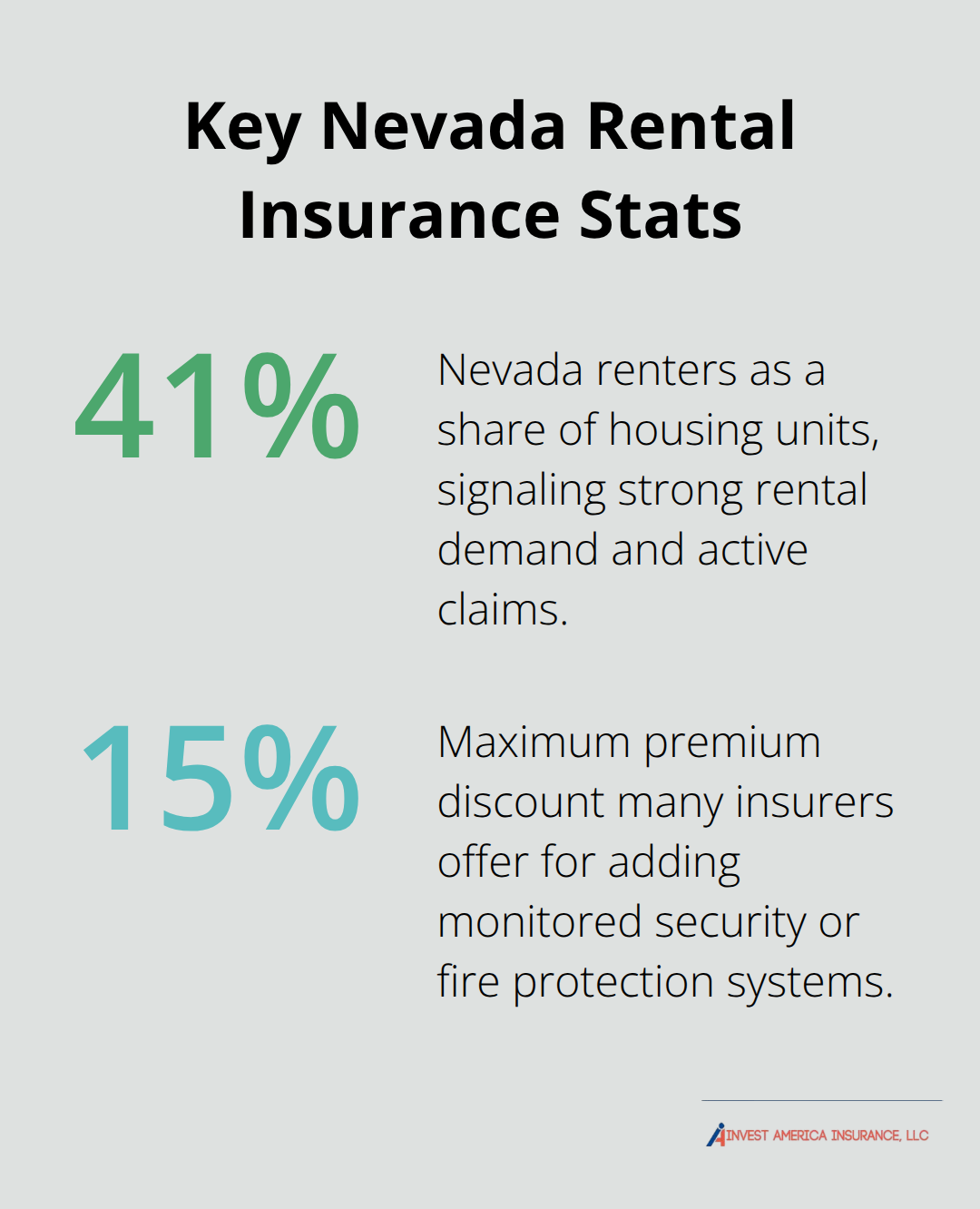
Climate risk in Nevada varies dramatically by location, and insurance rates reflect this reality. Las Vegas experiences extreme heat, occasional severe thunderstorms, and hail events that damage roofs and siding, while Reno sits in a higher-elevation zone with greater winter weather exposure and wildfire risk. According to U.S. Census Bureau data, Nevada renters account for about 41 percent of housing units, signaling strong rental demand but also competitive claims activity that affects pricing. Las Vegas properties typically cost around $805 annually in median premiums at roughly $1.93 per $1,000 of total insured value, while Reno averages $893 annually at $2.10 per $1,000 TIV, reflecting the city-level variation within the state.
Why Property Age and Location Drive Premium Differences
Rural Nevada properties often face higher rates due to longer emergency response times and limited repair contractor availability, making coverage even more valuable when losses occur. Property age significantly impacts your quote: homes built before 1950 cost substantially more because replacement materials and labor expenses are higher, while properties with copper wiring, updated roofing, and modern plumbing systems qualify for meaningful discounts. Water damage and roof condition emerge as the two largest rate drivers in Nevada underwriting, so document any recent roof repairs or replacements and disclose water damage history honestly to avoid coverage gaps later.
These location and property factors directly influence what you’ll pay for coverage. Understanding how insurers assess your specific property sets the stage for exploring the cost-reduction strategies that can lower your premiums without sacrificing protection.
How to Cut Your Rental Insurance Costs Without Sacrificing Protection
Location and Property Age Set Your Baseline Costs
Your property location and age are the two factors you cannot change, yet they drive the largest portion of your insurance quote. Las Vegas properties average $805 annually compared to Reno’s $893, an $88 difference that compounds to $880 over ten years on a single property. Within Las Vegas itself, zip codes matter dramatically: properties in high-crime areas or near flood zones pay 30-50% more than comparable homes in safer neighborhoods. Property age works against you in concrete ways-homes built before 1980 with aluminum wiring and original plumbing systems face substantially higher premiums because water damage and electrical fires present measurable risk.
If you own an older property, documenting recent upgrades to the roof, electrical system, or plumbing gives you leverage during quotes. Insurers will adjust rates downward when they see copper wiring replacing aluminum or a roof replaced within the last five years, so maintain records of all major repairs and provide them when shopping for coverage. The National Association of Insurance Commissioners data shows that property condition accounts for roughly 35% of premium variation in Nevada, meaning a property in excellent condition can save you hundreds annually compared to one showing deferred maintenance.
Security Systems Deliver Immediate Savings
Installing a burglar alarm, gated access, or fire sprinkler system can lower your premium by up to 15%, translating to meaningful annual savings on your policy. A monitored system produces larger discounts than unmonitored equipment, so professional monitoring pays for itself quickly. These upgrades reduce your actual risk profile, and insurers reward that reduction with concrete rate cuts that accumulate year after year.
Bundle Policies to Maximize Discounts
Bundling landlord insurance with your personal auto and home policies through the same carrier typically yields 10-20% discounts across all policies. A family insuring a home, two vehicles, and a rental property might save $300-$500 annually through multi-policy pricing. As an independent insurance agency based in Las Vegas, Invest America Insurance works with multiple top-rated carriers, allowing them to shop around on your behalf and identify the best bundling opportunities for your specific situation.
Deductible Selection Controls Your Monthly Cost
Deductible selection directly controls your monthly cost: raising your deductible from $500 to $1,500 typically reduces annual premiums by 15-25%, saving $150-$250 per year. The trade-off is real-you absorb more out-of-pocket after a claim-but for landlords with strong cash reserves and properties in lower-risk areas, the higher deductible strategy makes financial sense. Analyze your actual claims history before choosing: if you have not filed a claim in five years, the premium savings from a higher deductible likely outweigh the increased risk.
Annual Payment and Other Cost-Reduction Tactics
Paying your annual premium in full rather than monthly installments qualifies for discounts ranging from 3-8%, worth $30-$80 on a typical Nevada policy. The combination of these controllable factors-security systems, bundling, deductible optimization, and annual payment-can reduce your total cost by 35-40% without reducing your actual coverage limits.

Final Thoughts
Protecting your Nevada rental property requires understanding three core protections: dwelling coverage for the structure itself, liability protection against injury claims, and loss of rents coverage for income during repairs. Nevada’s lack of statutory insurance requirements does not eliminate your need for coverage-lenders will require it, and the state’s uncapped liability environment means a single injury claim could exceed your property’s value. Rental property insurance in Nevada costs roughly $800–$900 annually in most markets, a fraction of what a single uninsured loss could cost you.
Your actual premium depends on factors you control and factors you cannot. Property age, location, and climate exposure set your baseline cost, but security systems, bundled policies, higher deductibles, and annual payment options can reduce your total by 35–40% without cutting coverage. Document any recent upgrades to your roof, electrical system, or plumbing-these improvements translate directly into rate reductions when you shop for quotes.
Working with an independent insurance agent matters more than most landlords realize. Unlike captive agents tied to a single carrier, independent agents shop multiple top-rated insurers on your behalf and identify bundling opportunities tailored to your specific situation. Contact Invest America Insurance, an independent agency based in Las Vegas that works with multiple carriers to find the rental property insurance Nevada landlords actually need.